Biomechanics · Finite element analysis
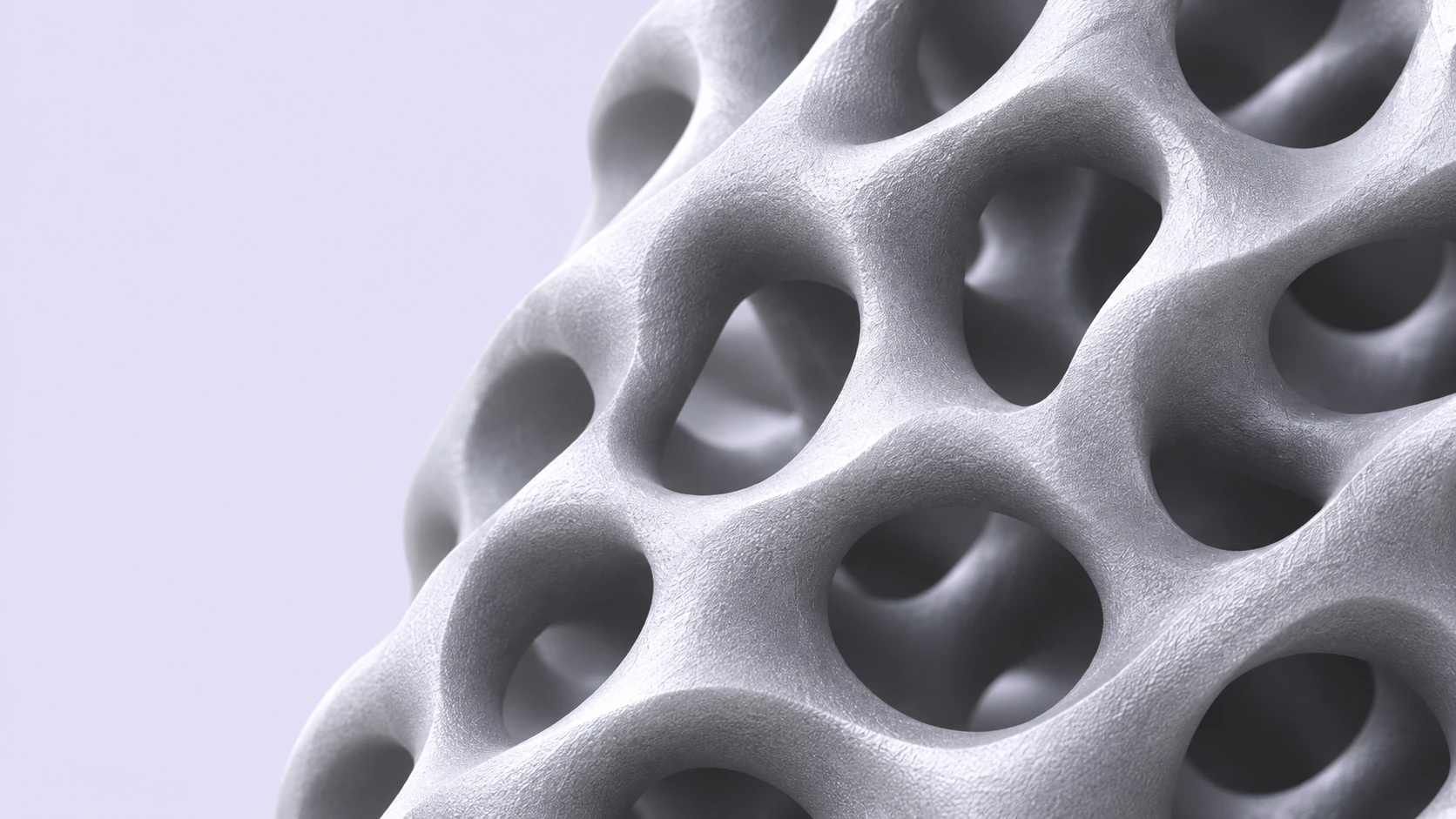
TPMS gyroid implant
Exploring how a porous gyroid architecture changes stress distribution in an All-on-Four implant model.
- Discipline
- Biomechanics · Finite element analysis
- Tools & methods
- ANSYS Mechanical / FEA / TPMS / Computational design
01 / THE QUESTION
What needed to be understood?
Implant architecture influences how mechanical loads transfer to the surrounding bone. This study investigates TPMS gyroid porosity as an alternative to a conventional solid implant within an All-on-Four model.
- TPMS gyroid architecture
- Static structural analysis
- Bone–implant load transfer
- Porous geometry
02 / THE APPROACH
From model to interpretation.
Integrate a TPMS gyroid porous structure into the implant design.
Perform static structural and finite element analyses using ANSYS Mechanical.
Examine stress distribution in the mandibular bone and the mechanical implications of porous architecture.
03 / MY CONTRIBUTION
The work I brought to the project.
Computational implant geometry and structural analysis, with attention to mechanical strength and load transfer. This is an engineering study; no clinical validation or medical-device certification is claimed.
Discuss the engineering behind it.
For the model context, assumptions and available technical documentation, start a conversation about this study.
Discuss this project